
The Anonymous Economy
A masked figure emerges from the shadows of capitalism. Works appear overnight on walls across continents. The market responds with fervor rarely seen in traditional art circles. Anonymous street artist Banksy has built an empire worth over one hundred million dollars annually without ever revealing their identity.
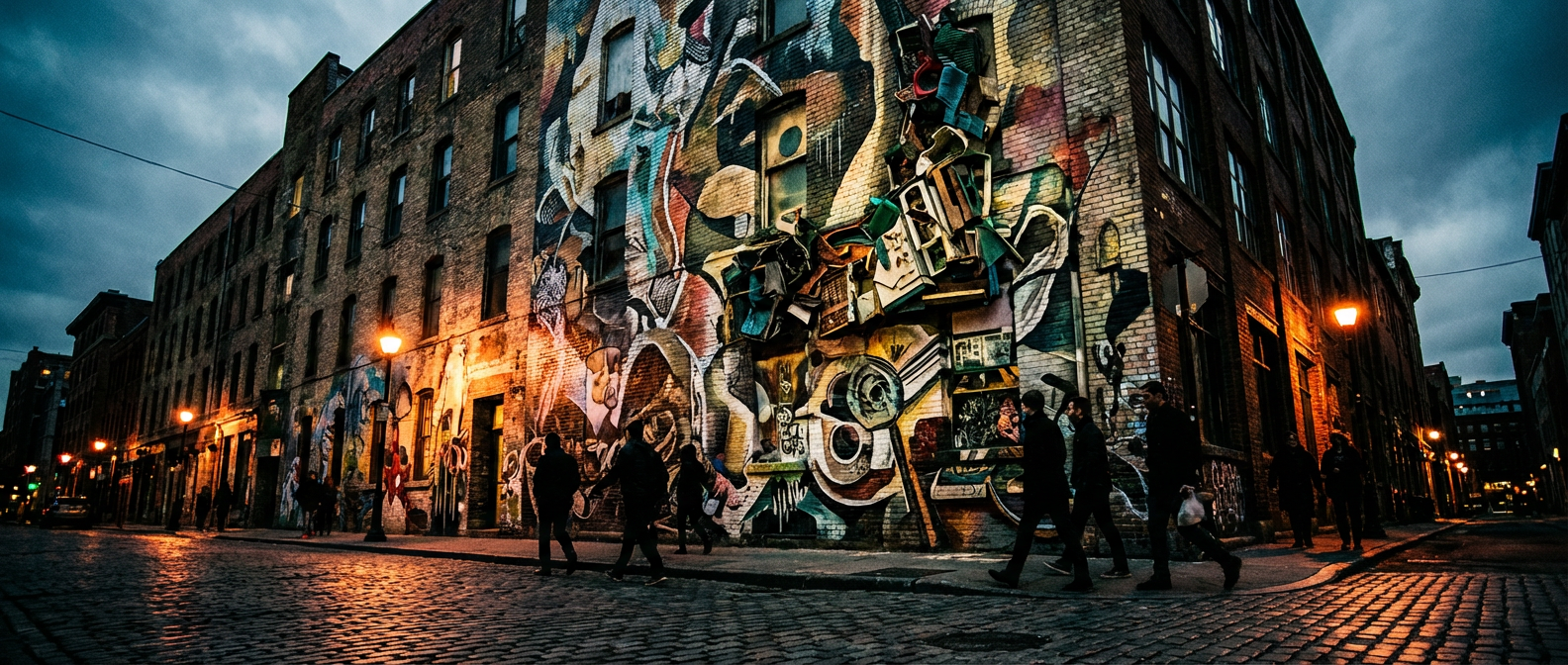
This paradox defines where we are right now. Street art, once the domain of rebellious youth armed with spray cans, now commands gallery prices and corporate attention. The underground has surfaced, bringing its raw energy into boardrooms and auction houses. Museums are scrambling to acquire pieces originally created as acts of defiance against institutional power.
The transformation goes way beyond individual success stories. What started as territorial marking and political protest has become a legitimate art movement that shapes how cities look worldwide. Widewalls street art coverage documents this shift from vandalism to valued cultural expression. And honestly, it’s fascinating to watch.

Reclaiming the Urban Canvas
City planners walk different streets today. Where advertising billboards once dominated sightlines, commissioned murals now tell neighborhood stories. Urban renewal projects increasingly replace commercial hoardings with community-driven art that reflects local identity rather than corporate messaging.
This shift is more than aesthetic preference. Municipal governments have figured out that street art can transform neglected areas into cultural destinations. Property values rise. Tourism follows. What once required expensive marketing campaigns now happens organically through authentic artistic expression.
The process requires careful balance. Cities have to preserve spontaneous creativity while managing planned development. Some walls stay open as canvases for emerging artists. Others feature established names working on large-scale commissions that anchor neighborhoods in artistic identity. It’s a delicate dance between control and chaos.
The Tourist Trail Revolution
Guidebooks rewrite themselves annually. Street art tours now rank among the top five activities in major cities according to TripAdvisor data. Visitors want authentic cultural experiences beyond traditional museums and monuments. They want to discover hidden murals in industrial districts and watch artists at work.
This demand creates new economic opportunities. Local guides specialize in underground art scenes. Artists adapt their practice to include interaction with curious tourists. Neighborhoods previously considered sketchy become essential stops on cultural itineraries.
The phenomenon has gone global. Berlin’s East Side Gallery draws millions to remaining sections of the Berlin Wall. London’s Shoreditch attracts weekend crowds hunting for Instagram-worthy backdrops. Mexico City’s Roma Norte neighborhood transforms through artistic intervention and the foot traffic that follows. Each city develops its own street art personality.
The Municipal Balancing Act
City hall meetings have gotten complicated. Officials navigate between property owners demanding graffiti removal and arts advocates pushing for public art investment. The line between vandalism and valuable cultural expression blurs daily. Legal frameworks struggle to keep up with artistic innovation.
Some cities take pragmatic approaches. They designate legal walls where artists can work without fear of prosecution. Others create permit systems for larger murals while cracking down hard on unauthorized tagging. The smartest municipalities hire former graffiti artists as community liaisons and cultural consultants.
Budget allocations reflect this evolution. Money previously spent entirely on cleaning and covering unauthorized artwork now supports commissioned pieces and artist residencies. The economic argument makes sense: investing in legitimate street art prevents illegal graffiti while generating cultural capital that attracts businesses and residents.
Digital Dimensions and Collective Spaces
Technology is expanding what’s possible beyond physical walls. Digital projection mapping transforms static murals into interactive experiences that respond to movement and sound. Artists collaborate with programmers to create augmented reality layers that viewers access through smartphone apps. The boundary between physical and virtual art is dissolving before our eyes.
Meanwhile, artist collectives are reclaiming forgotten urban spaces as temporary galleries. Abandoned warehouses become exhibition venues for emerging talent. Empty lots transform into outdoor installations that exist until development pressure forces relocation. Street Art News chronicles these temporary projects that capture contemporary artistic energy.
These collective efforts show how art can activate underutilized spaces. Property owners discover that artistic occupation prevents vandalism and draws positive attention to their holdings. Developers begin factoring street art into renovation plans, recognizing the cultural value these artists bring to neighborhoods.
The movement keeps changing as artists push boundaries between sanctioned and subversive expression. Each generation redefines what authentic street art looks like versus commercialized knockoffs. The conversation itself becomes part of the artistic process, keeping public art dynamic and culturally relevant.
Walk any major city today and you’ll witness this transformation firsthand. Notice which walls speak with authorized voices and which whisper underground messages. Watch how communities interact with artwork in their daily routines. The streets themselves tell the story of art’s power to reshape urban experience one wall at a time.
