Art, culture, and the conversations that matter.

Author: Hilda Holland (page 7 of 11)

MoMA’s AI Acquisition Isn’t a Betrayal—It’s a Mirror We Need to Look Into

The Institutional Moment That Changed Everything

Late 2024 arrived with a declaration that felt inevitable and shocking in equal measure. The Museum of Modern Art, the same institution that once faced visceral pushback for canonizing photography and film, announced it would formally acquire AI-assisted artworks into its permanent collection. The backlash was immediate, predictable, and—let’s be honest—a bit tired. But here’s what the outrage actually revealed: we’re not really arguing about art. We’re arguing about labor, value, and who gets to decide what counts as creative work.

MoMA's AI Acquisition Isn't a Betrayal—It's a Mirror We Need to Look Into
MoMA’s AI Acquisition Isn’t a Betrayal—It’s a Mirror We Need to Look Into

This wasn’t a sudden pivot. The groundwork had been laid years earlier. When Refik Anadol’s “Unsupervised” installation drew over 400,000 visitors during its 2023 run at MoMA, something shifted in the institutional calculus. Museums track attendance like galleries track sales. When a piece moves that many bodies through a space, when it generates that much conversation—whether reverent or furious—institutions notice. They also archive. And archiving leads to acquisition.

Follow the Money, Follow the Legitimacy

The art market has never been subtle about its priorities. Christie’s understood the assignment in March 2025 when it launched a dedicated “AI & New Media” auction category. The inaugural sale generated $8.2 million in a single evening. That’s not fringe collector behavior. That’s capital voting with its wallet. Meanwhile, global AI art sales hit $1.3 billion in 2024—a staggering 240 percent jump from 2022. These aren’t vanity metrics. They’re institutional inevitability wearing a price tag.

What MoMA is doing, then, isn’t pioneering so much as catching up to what the market already decided. Museums have always been late to the party. They canonize after consensus forms, after the real risk has been absorbed by galleries and collectors with less institutional weight to protect. MoMA’s mission has always been to contextualize the new within the continuum of modern thought. That’s exactly what’s happening here, whether we like the conclusion or not.

The 61 Percent That Can’t Be Ignored

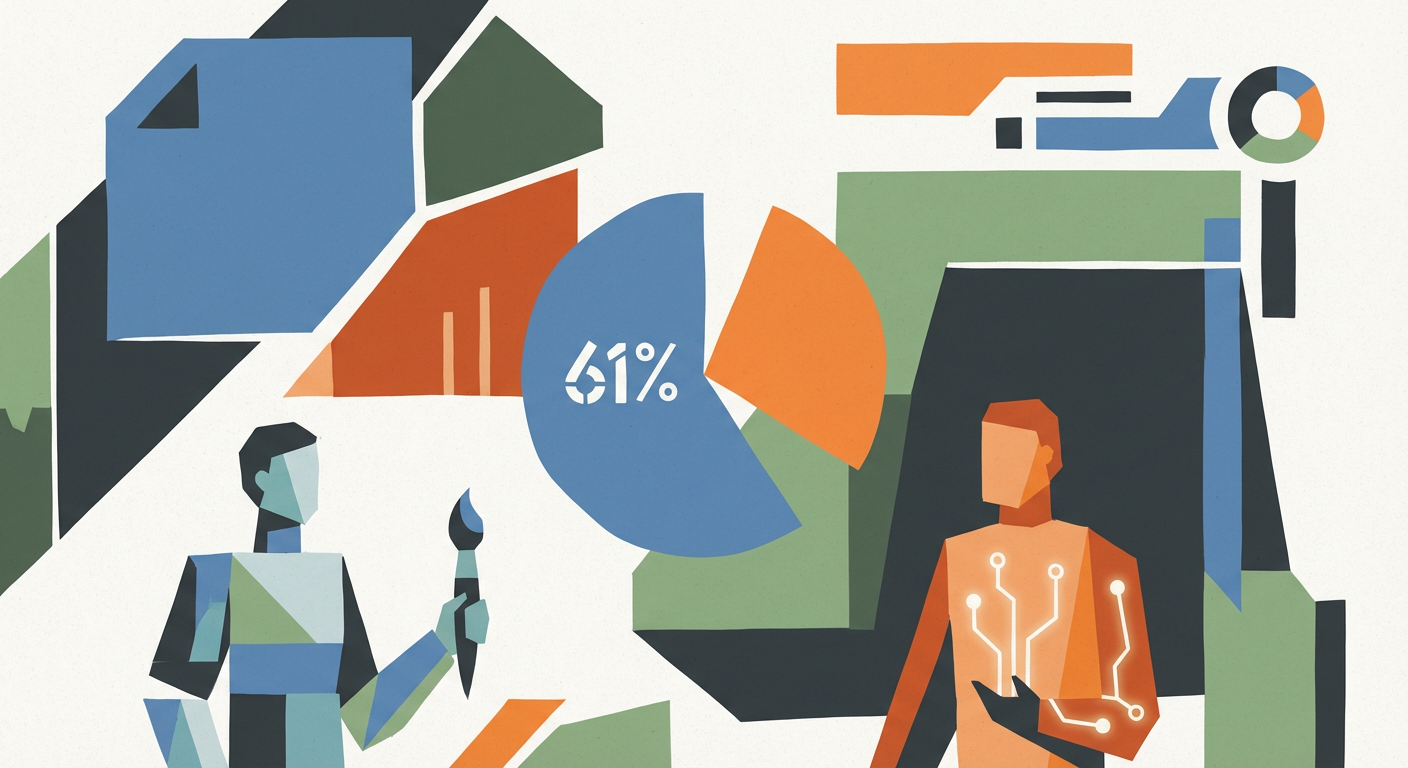
But let’s reckon with the legitimate fury. A 2025 survey by the College Art Association found that 61 percent of working studio artists believe AI art acquiring museum status undermines the labor and craft of human artmaking. That’s not a fringe complaint. That’s a supermajority of practicing artists, many of whom are already precarious, watching institutional legitimacy flow toward something generated by an algorithm. The grievance deserves examination, not dismissal.

Here’s where context matters. Artists have always resisted new tools and technologies. Photography didn’t destroy painting. It forced painting to become something else—more experimental, more abstract, more conceptually adventurous. Film didn’t kill theater. It changed what theater could be. The anxiety isn’t really about AI art itself. It’s about scarcity. When MoMA adds AI to its collection, it’s not removing a human artist from the wall. But it feels that way to people whose livelihoods depend on institutional favor being finite.

The actual betrayal in contemporary art isn’t MoMA acquiring algorithmic work. It’s that institutions have been systematically underfunding art education, artist residencies, and support systems for decades. It’s that the art market has become so dominated by wealth speculation that young artists can barely afford to live in the same cities where their work might be seen. MoMA’s AI acquisition is a symptom of larger failures, not the disease itself. You can check College Art Association resources on AI and art ethics for deeper dives into these arguments—they’re wrestling with this honestly.

What MoMA Is Actually Saying

When a museum of that scale acquires anything, it’s making a curatorial and historical argument. It’s saying: this belongs in the conversation about how humans make meaning. Whether we agree matters less than understanding what the statement implies. MoMA’s collection and acquisition philosophy has always reflected the institution’s conviction that modern art documents how consciousness evolves within technological systems. That includes photography, film, video, and digital media. AI is the next logical conversation.

The bold part isn’t that they acquired AI work. It’s that they’re doing it openly, courting this exact conversation, refusing to pretend the question has already been settled. Museums could have quietly slipped algorithmic pieces into their permanent collections across the next five years, buried them among other contemporary work, let time do the legitimating. Instead, MoMA announced it. They made the stakes visible. That’s the opposite of institutional cowardice.

The Actual Reckoning Ahead

What matters now isn’t whether MoMA’s decision was right or wrong. It’s what happens next. How does the museum contextualize these pieces? Who authored them? What human decisions shaped the parameters? What labor disappeared into the algorithm? These are the curatorial challenges that separate thoughtful acquisition from mere market chasing—the difference between an institution that’s paying attention and one that’s just following the hype.

The truth is less dramatic than either side wants it to be. MoMA isn’t betraying art by acquiring AI work. But they’d be betraying their actual mission if they acquired it thoughtlessly, without wrestling with precisely the concerns that 61 percent of artists are raising. The real question here isn’t deciding whether AI belongs in museums. It’s deciding what we ask from museums in an era when authorship, labor, and value have become genuinely unsettled.

Where do you land on this? Have you seen work that shifted your thinking on what AI can contribute to visual culture? The conversation is worth having with both rigor and generosity intact.

How Charli XCX’s ‘Brat’ Broke the Gallery System and Made Everyone Look Stupid

The Lime-Green Takeover Nobody Saw Coming

It’s March 2025, and I’m standing in the back of a SoHo gallery that shall remain nameless, watching a gallerist frantically adjust their press materials. The color scheme they’ve committed to for the next three months? A specific shade of lime green that is, let’s be honest, almost impossible to misidentify. The gallerist catches my eye, shrugs, and says: “Charli XCX did this to us.” She’s not wrong.

Between August 2024 and now, something genuinely seismic happened in the visual art world, and it arrived not through institutional mandate or curatorial decree. It came through Charli XCX’s album cover. One color. One font choice. One commitment to strategic, almost aggressive minimalism that cut through a decade of visual maximalism like a scalpel. According to Artsy analysis of Brat’s influence on visual art marketing, that particular shade of lime appeared in over 340 documented gallery show promotions and art fair booths worldwide. Three hundred and forty. That’s not a trend. That’s a hostile takeover.

When Pop Music Outgalleries the Galleries

Here’s what actually happened, and why it matters more than you might think. Imogen Sparke, Charli’s creative director, made a choice that was simultaneously the safest and most radical decision in recent memory: she put white text on a lime background. No layering. No conceptual winking. No post-ironic deconstruction. Just text. Color. Breathing room. It was so aggressively simple that it immediately became the visual language everyone wanted to speak.

The Grammy Recording Academy understood the assignment in January 2025 when they awarded Album of the Year to “Brat,” making specific mention in their official citation of the album’s “cultural visual impact” alongside its sonic achievements. Think about that for a moment. The Recording Academy, an institution built on the primacy of sound, felt compelled to center the visual dimension. They had to. The image was inescapable. Spotify reported it became the most screenshot and shared album cover on its entire platform in 2024. Not a close second. The most.

What Sparke understood, and what most designers had forgotten, was that restraint reads as radical in a moment drowning in visual information. The album cover’s lo-fi text-on-color approach didn’t arrive as a throwback or an ironic gesture. It landed as a reset button. After a decade of maximalist album art trends, after Instagram forced every visual medium into febrile, overproduced chaos, here was something that simply said: less.

The Fashion Economy Caught Fire

Fashion responded immediately, because fashion always knows first. Valentino dropped a lime capsule collection. Dover Street Market launched their own interpretation. Six independent streetwear labels moved fast enough to ride the wave before it crested. According to Business of Fashion on the Brat economy, these collaborative efforts generated a combined estimated forty million dollars in revenue in Q4 2024 alone. Fashion, which typically ignores music marketing, couldn’t afford to look away.

But here’s where it gets interesting, and where the gallery world started looking genuinely foolish. Fashion was moving at the speed of cultural relevance. Galleries were moving at the speed of quarterly programming cycles. By the time most institutional spaces could theoretically respond to what Charli had done, the moment had already calcified into institutional memory. The Whitney Museum’s spring 2025 panel, “Post-Internet Aesthetics and the Pop Art Machine,” had to cite the Brat album cover as a primary case study just to maintain credibility in a conversation their own infrastructure had fundamentally failed to address.

Why Museums Got Caught Flat-Footed

Let’s be direct about what happened here. The contemporary art world operates on a timeline that has become comically misaligned with actual culture. You can’t schedule your response to a visual moment that arrived fully formed, achieved complete market saturation, and entered the cultural lexicon within six weeks. Gallery programming gets locked twelve months in advance. By the time a curator can pitch a show about a cultural phenomenon, that phenomenon has usually already been absorbed, repackaged, and turned into heritage.

Pop music, conversely, operates at light speed. Charli’s team released the album, the visual identity solidified immediately, and the market responded within days. The institutional art world was left standing at the platform watching the train depart without them. Galleries didn’t fail because they weren’t paying attention. They failed because their structural mechanics make them fundamentally unequipped to engage with cultural moments as they’re actually happening.

What Happens When the System Recalibrates

The interesting question now isn’t whether galleries will adapt. Of course they will. Most already have, in the form of hastily approved signage and promotional materials that desperately want to claim kinship with the moment. The real question is whether this experience has taught the institutional art world anything structural. Can you build systems responsive enough to engage with culture in real time while maintaining the curatorial integrity that justifies your existence in the first place?

I don’t have an answer yet. But I know this: a pop artist and her creative director just accomplished something the contemporary art establishment has spent decades failing to do consistently, which is create visual language that moves through the culture with genuine urgency. They did it with color, a font choice, and commitment. No artist statements. No institutional validation required. Just work that worked.

That should terrify and animate everyone in the gallery circuit. What are your thoughts on how the visual art world is responding to pop culture dominance? I’m genuinely curious whether you think this represents a real shift or a temporary blip that’ll correct itself once the market mood changes.

Anora’s Palme d’Or Win Proves Cannes Still Knows How to Recognize Genius (Even When It’s Cheap)

The Budget Question Nobody Wants to Ask

Sean Baker made Anora for $6 million. That’s not a typo. That’s not a budget before tax incentives or inflated Hollywood accounting. That’s the actual cost of production for a film that just won the Palme d’Or at Cannes, then swept into the Academy Awards and walked away with Best Picture plus four other statuettes, including Best Director for Baker himself. Let that settle in for a moment.

For context, that $6 million figure is one of the lowest budgets for a Palme d’Or winner in two decades. Most major festival winners carry the institutional backing of larger production companies or streaming platforms. Anora didn’t. It came from Neon, a distributor that started as a scrappy indie outfit and has somehow held onto that identity while becoming genuinely influential. The film itself is a ballsy, formally inventive comedy-drama about a sex worker in Manhattan. It’s specific. It’s uncomfortable. It’s weird. And apparently, that’s exactly what the world’s most prestigious film festival wanted to celebrate.

What Cannes Choosing Anora Actually Means

The Palme d’Or decision landed like a gut punch to everyone convinced that Cannes had become a playground for prestige television and safe bets. Critics spent the entire festival season arguing about whether the competition had teeth anymore, whether international cinema was truly being championed or just performed for cinephiles. Then the jury handed the top prize to a low-budget American indie shot in New York. The message was hard to miss, even if nobody wanted to admit it immediately.

This wasn’t a feel-good underdog story. This was Cannes showing it remembers what it’s for. Baker’s previous feature, Tangerine, premiered at Sundance in 2015 and created legitimate waves using unconventional production methods. He’d been working at the margins of commercial cinema for years, building something meaningful without waiting for permission from gatekeepers. When Anora landed in competition, the festival recognized it for what it was: a genuine artistic statement from a filmmaker with something to say about power, vulnerability, and transaction in contemporary America. You can disagree with that read, but you can’t call it cynical.

The Box Office Argument (Which Everyone’s Getting Wrong)

Here’s where the story gets interesting in a way that breaks both the indie celebration narrative and the Cannes-has-lost-the-plot argument. Anora grossed $13.5 million worldwide in theatrical release. That’s solid for an indie film. That’s profitable, particularly considering the Neon distribution deal valued at approximately $8 million. But it’s not a blockbuster. It won’t reshape the industry or prove that everyone was wrong about what audiences want. It’s exactly what a successful mid-budget indie film looks like in 2024-2025.

The point isn’t that Anora conquered multiplexes or proved the streaming apocalypse false. The point is that a small-budget, formally ambitious, narratively complex film about sex work found its audience through the festival circuit, critical acclaim, and word-of-mouth. It proved the pipeline still functions. When Neon released Anora on their streaming platform in February 2025, it generated the platform’s highest single-day sign-up rate since founding, adding an estimated 340,000 new subscribers in one day. That’s not just a win for indie cinema. That’s evidence the infrastructure supporting independent films actually works when the work is exceptional.

The Oscar Sweep and What It Reveals

Five Oscars. Best Picture. Best Director. Baker joined exactly twelve directors who have won both the Palme d’Or and Academy Award for Best Director in the same calendar cycle. That’s genuinely rare company. This wasn’t a sentimental win from the Academy or a contrarian choice dressed up as progressivism. Every major critic, every serious film writer had already made the case for Anora before the nominations dropped. The Oscar win confirmed what Cannes had already established.

What’s worth examining is how the Academy’s recent voting patterns have started aligning with festival culture in ways that suggest institutional taste is actually shifting. According to the USC Annenberg Inclusion Initiative 2025 Report, films with non-white lead performers in Best Picture winners have increased to 60% representation over the prior five-year period. That’s not political correctness masquerading as progress. That’s the industry recognizing that the stories worth telling come from everywhere. Anora features Mikey Madison in a lead role that demands everything from an actor and gives her nowhere to hide. The Academy recognized that performance. The system, messy as it is, occasionally works.

So Is This a Victory for Indie Cinema or Proof Cannes Lost It?

Both and neither. Neither if you’re looking for a clean narrative about scrappy filmmakers defeating the establishment. Both if you understand that cinema needs festival systems to function, needs institutions that take risks, and needs audiences willing to engage with work that challenges them. Cannes hasn’t lost the plot. It’s just that the plot was never what the skeptics thought it was.

The real story here is that a filmmaker spent years building his craft, made a film on a modest budget, got distribution through a company willing to champion difficult work, found an audience, and then watched as every institutional structure from Cannes to the Academy validated that work. That’s not chaos or capitulation. That’s the system functioning as designed, which is rarer than it should be.

You can debate whether the film deserved these awards. That’s the conversation worth having over dinner. But pretending that Anora’s trajectory represents either a glorious indie victory or institutional failure misses what actually happened. A film that cost $6 million to make generated this level of cultural conversation. That’s not a victory for one side or the other. That’s cinema doing what it does. Want to dig deeper into the festival’s decision-making process? Check the Cannes Film Festival Official Archive to trace how these conversations develop year after year.

Anora’s Palme d’Or Win Proves Cannes Still Knows How to Recognize Genius (Even When It’s Cheap)

The Budget Question Nobody Wants to Ask

Sean Baker made Anora for $6 million. That’s not a typo. That’s not a budget before tax incentives or inflated Hollywood accounting. That’s the actual cost of production for a film that just won the Palme d’Or at Cannes, then swept into the Academy Awards and walked away with Best Picture plus four other statuettes, including Best Director for Baker himself. Let that settle in for a moment.

For context, that $6 million figure is one of the lowest budgets for a Palme d’Or winner in two decades. Most major festival winners carry the institutional backing of larger production companies or streaming platforms. Anora didn’t. It came from Neon, a distributor that started as a scrappy indie outfit and has somehow held onto that identity while becoming genuinely influential. The film itself is a ballsy, formally inventive comedy-drama about a sex worker in Manhattan. It’s specific. It’s uncomfortable. It’s weird. And apparently, that’s exactly what the world’s most prestigious film festival wanted to celebrate.

What Cannes Choosing Anora Actually Means

The Palme d’Or decision landed like a gut punch to everyone convinced that Cannes had become a playground for prestige television and safe bets. Critics spent the entire festival season arguing about whether the competition had teeth anymore, whether international cinema was truly being championed or just performed for cinephiles. Then the jury handed the top prize to a low-budget American indie shot in New York. The message was hard to miss, even if nobody wanted to admit it immediately.

This wasn’t a feel-good underdog story. This was Cannes showing it remembers what it’s for. Baker’s previous feature, Tangerine, premiered at Sundance in 2015 and created legitimate waves using unconventional production methods. He’d been working at the margins of commercial cinema for years, building something meaningful without waiting for permission from gatekeepers. When Anora landed in competition, the festival recognized it for what it was: a genuine artistic statement from a filmmaker with something to say about power, vulnerability, and transaction in contemporary America. You can disagree with that read, but you can’t call it cynical.

The Box Office Argument (Which Everyone’s Getting Wrong)

Here’s where the story gets interesting in a way that breaks both the indie celebration narrative and the Cannes-has-lost-the-plot argument. Anora grossed $13.5 million worldwide in theatrical release. That’s solid for an indie film. That’s profitable, particularly considering the Neon distribution deal valued at approximately $8 million. But it’s not a blockbuster. It won’t reshape the industry or prove that everyone was wrong about what audiences want. It’s exactly what a successful mid-budget indie film looks like in 2024-2025.

The point isn’t that Anora conquered multiplexes or proved the streaming apocalypse false. The point is that a small-budget, formally ambitious, narratively complex film about sex work found its audience through the festival circuit, critical acclaim, and word-of-mouth. It proved the pipeline still functions. When Neon released Anora on their streaming platform in February 2025, it generated the platform’s highest single-day sign-up rate since founding, adding an estimated 340,000 new subscribers in one day. That’s not just a win for indie cinema. That’s evidence the infrastructure supporting independent films actually works when the work is exceptional.

The Oscar Sweep and What It Reveals

Five Oscars. Best Picture. Best Director. Baker joined exactly twelve directors who have won both the Palme d’Or and Academy Award for Best Director in the same calendar cycle. That’s genuinely rare company. This wasn’t a sentimental win from the Academy or a contrarian choice dressed up as progressivism. Every major critic, every serious film writer had already made the case for Anora before the nominations dropped. The Oscar win confirmed what Cannes had already established.

What’s worth examining is how the Academy’s recent voting patterns have started aligning with festival culture in ways that suggest institutional taste is actually shifting. According to the USC Annenberg Inclusion Initiative 2025 Report, films with non-white lead performers in Best Picture winners have increased to 60% representation over the prior five-year period. That’s not political correctness masquerading as progress. That’s the industry recognizing that the stories worth telling come from everywhere. Anora features Mikey Madison in a lead role that demands everything from an actor and gives her nowhere to hide. The Academy recognized that performance. The system, messy as it is, occasionally works.

So Is This a Victory for Indie Cinema or Proof Cannes Lost It?

Both and neither. Neither if you’re looking for a clean narrative about scrappy filmmakers defeating the establishment. Both if you understand that cinema needs festival systems to function, needs institutions that take risks, and needs audiences willing to engage with work that challenges them. Cannes hasn’t lost the plot. It’s just that the plot was never what the skeptics thought it was.

The real story here is that a filmmaker spent years building his craft, made a film on a modest budget, got distribution through a company willing to champion difficult work, found an audience, and then watched as every institutional structure from Cannes to the Academy validated that work. That’s not chaos or capitulation. That’s the system functioning as designed, which is rarer than it should be.

You can debate whether the film deserved these awards. That’s the conversation worth having over dinner. But pretending that Anora’s trajectory represents either a glorious indie victory or institutional failure misses what actually happened. A film that cost $6 million to make generated this level of cultural conversation. That’s not a victory for one side or the other. That’s cinema doing what it does. Want to dig deeper into the festival’s decision-making process? Check the Cannes Film Festival Official Archive to trace how these conversations develop year after year.

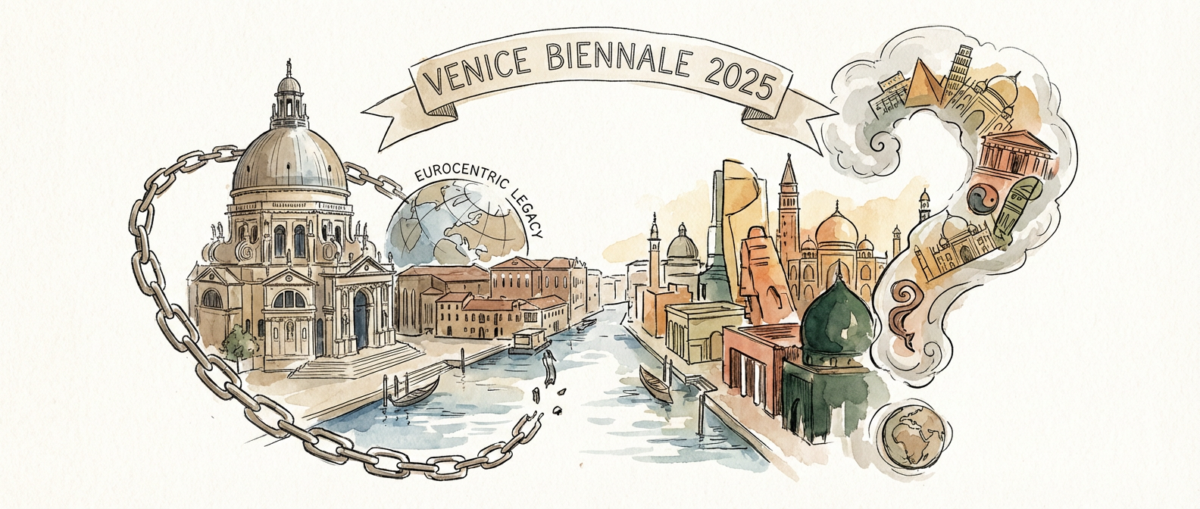
Venice 2026 and the Hangover Nobody’s Talking About: How ‘Foreigners Everywhere’ Broke Everything

The Pedrosa Effect and Its Uncomfortable Afterlife

Adriano Pedrosa’s 2024 Venice Biennale wasn’t just successful. It was anomalously, disruptively successful. Seven hundred thousand visitors flooded the Giardini and Arsenale. That number doesn’t sit comfortably in the Venice Biennale’s 129-year operating history. It’s a record that feels less like an achievement and more like a seismic event nobody planned for.

“Foreigners Everywhere” did what the biennial supposedly does: it centered Global South artists, repositioned the conversation, made space for voices that usually occupy footnotes. The numbers proved something radical had occurred. People actually showed up. But here’s where the hangover begins: everyone now expects the next iteration to replicate that energy, that newness, that righteous repositioning. Curators work within constraints. Records create impossible benchmarks.

What nobody anticipated was how thoroughly Pedrosa’s thematic framework would destabilize the national pavilion system itself. The theme wasn’t just about inclusion. It was a philosophical cudgel against the very nation-state apparatus that organizes the Biennale. You can’t spend months celebrating transnational solidarity and then expect pavilion directors to neatly package “Italian” or “American” or “Japanese” identity into a tidy white-box gallery. The contradiction became impossible to ignore.

Infrastructure, Politics, and the Four-Year Gamble

The Italian government’s announcement of a 4.2 million euro investment in restoring three historic pavilion structures is the largest infrastructural commitment since 2008. That’s meaningful. That’s also deeply political.

Here’s the tension: you’re simultaneously celebrating “Foreigners Everywhere” while pouring resources into the physical nationalist architecture that the theme implicitly critiques. The government isn’t funding this restoration out of sentimental attachment to architectural heritage. It’s a power play. By renovating these pavilions, Italy signals dominance over the Biennale’s spatial organization. It controls the physical stage upon which national identity performs.

Compare this to how countries without permanent pavilions operate. They rent. They adapt. They survive on smaller budgets and sharper conceptual thinking. When Saudi Arabia, Kenya, and Portugal announced their 2026 pavilion curators months in advance, it wasn’t coincidental timing. These announcements are declarations of intent. They’re saying: we’re taking the national pavilion seriously. We’re not waiting to see what the theme is. We’re asserting ourselves now.

The Giardini’s physical restoration becomes a kind of arms race. Announce curators early. Secure budgets aggressively. Make claims on space before the conceptual framework even emerges. It’s less about art and more about geopolitical real estate.

The Curator Cascade and Strategic Positioning

By early 2025, at least nine countries had publicly named their 2026 pavilion curators. That velocity is unusual. Typically, pavilion selections happen closer to opening. The advance announcements suggest something different is happening: countries are scrambling to position themselves within the anticipated “Foreigners Everywhere” hangover without actually knowing what that hangover looks like.

Kenya’s strategic move is worth examining specifically. A nation with limited established art infrastructure within traditional Western institutional circles is now signaling serious curatorial ambition for 2026. It’s not participating in the system as a secondary player. It’s staking ground. Portugal has pulled the same move, increasingly leveraging its peripheral European status into cultural authority. Saudi Arabia’s announcement functions differently, though. It’s a cultural soft power deployment, calculated to establish legitimacy within global art discourse.

These weren’t random selections. They were moves made by countries that understood how Pedrosa’s thematic reorientation had opened apertures. If the Biennale now celebrates foreignness, translocality, deterritorialized artistic practice, then the old hierarchy of pavilion prestige shifts. Suddenly, non-Western participation isn’t decorative inclusion. It’s conceptually central. Countries are moving to capitalize on that shift before the 2026 curator announces their own thematic apparatus and potentially recentralizes everything.

Economic Gravity and the Ripple Effects

The Venice Biennale generates approximately 350 million euros in total economic activity for the Veneto region during exhibition years. That’s not artistic success measured in cultural terms. That’s economic leverage. And leverage shapes institutional decision-making in ways that rarely appear in curatorial manifestos.

When pavilion nations commit resources and announce curators early, they’re not just thinking about critical reception. They’re thinking about return on investment. Tourism. International visibility translated into economic benefit for their cultural sectors back home. The Biennale is a global stage, yes, but it also functions as an economic engine that incentivizes strategic participation.

The Australian Pavilion’s 2024 triumph, Archie Moore’s “kith and kin” earning the Golden Lion for Best National Participation, illustrates how deeply this system rewards specific kinds of positioning. Sixty-five thousand years of First Nations genealogy rendered in chalk across pavilion walls. It was conceptually rigorous, aesthetically arresting, and it performed a particular kind of geopolitical work. Australia used national pavilion infrastructure to legitimize and center Indigenous artistic practice on a global stage. That’s not apolitical. That’s strategic nationalism disguised as cultural representation.

Every country now understands what Australia demonstrated: the national pavilion isn’t a constraint. It’s a tool. It’s how you leverage your nation’s cultural authority while simultaneously claiming to transcend national categories.

The Unresolved Contradiction and What Comes Next

The hungover state of Venice Biennale pavilion politics comes from an unresolved contradiction. The 2024 edition celebrated “Foreigners Everywhere” while operating within a physical and institutional structure predicated on national distinctions. That contradiction doesn’t resolve itself. It compounds.

For 2026, we’re watching countries weaponize the tension. They’re announcing curators to claim thematic authority before the official theme even exists. They’re demanding infrastructure investment to maintain pavilion prestige in a system supposedly celebrating deterritorialized identity. They’re performing transnational solidarity while calculating their own geopolitical advantage.

This isn’t failure or hypocrisy, exactly. It’s how institutional critique gets absorbed into institutional practice. The system survives by incorporating the critique. The Biennale becomes more sophisticated about celebrating foreignness while remaining fundamentally organized around national representation. Everyone understands the game now. The question is whether 2026’s curator will address the contradiction or simply extend the productive tension further.

Check La Biennale di Venezia Official Site for emerging details, though expect announcements to remain strategically vague until late in the process. For reference on how this strategic positioning plays out in practice, Archie Moore Australia Pavilion demonstrates the current sophistication level.

What’s your read on this? Do you think the 2026 curator should lean into the contradiction or attempt genuine resolution? Or is the productive tension itself the actual content worth celebrating?

The Movements We Erased: Why Chicano Theatre and Brazilian Concretism Still Matter More Than Your MFA Program

The Whitney Biennial committee sits around a conference table in 2024, debating which emerging artists deserve wall space. Names get tossed around like currency. Everyone nods knowingly about “decolonizing the canon.” But ask them about Teatro Campesino’s influence on performance art, or how the Noigandres poets rewrote the rules of visual poetry decades before Instagram, and you get blank stares. We’ve become experts at forgetting our own recent history.

This isn’t academic nostalgia. These movements shaped contemporary practice in ways that remain invisible because we’ve sanitized them out of the story. While galleries scramble to present “political art” and “experimental poetry,” they’re ignoring the blueprints that already exist. The radical work is hiding in plain sight, dismissed as regional curiosities or historical footnotes.

Teatro Campesino and the Birth of Agitprop Performance

Luis Valdez founded Teatro Campesino in 1965 in the fields of Delano, California. Not in some downtown arts district, not with a grant application, but on the literal frontlines of the United Farm Workers’ strike. The actors were farmworkers. The stage was a flatbed truck. The audience stood in the dirt, still wearing their work clothes.

This wasn’t community theatre with good intentions. Valdez and his collaborators created a new form: the acto, a short, satirical piece that could be performed anywhere, anytime, without sets or costumes. They built a visual language using masks, stereotypes turned inside-out, and direct address that broke every rule of theatrical fourth walls. When Teatro Campesino performed “Las Dos Caras del Patroncito” (The Two Faces of the Boss), they weren’t just entertaining striking workers. They were creating a template for political performance that would influence everyone from Culture Clash to Taylor Mac.

Yet walk into any contemporary performance space and try to trace the lineage. Curators will cite Brecht, mention Grotowski, maybe throw in some Augusto Boal if they’re feeling comprehensive. But Teatro Campesino? Too specific, too rooted in a particular struggle. The work gets filed under “Chicano studies” rather than “experimental theatre,” as if geography and politics somehow make innovation less innovative.

Brazilian Concretism’s Digital Prophecy

Haroldo de Campos published “The Concrete Poem” in 1956, arguing that poetry should abandon linear narrative for spatial arrangement. Words became visual elements. Syntax dissolved into pattern. The page became a field of action, not a container for thoughts. He wasn’t working alone. The Noigandres group, including Augusto de Campos and Décio Pignatari, reimagined what language could do when freed from the tyranny of the sentence.

Their work predicted our current relationship with text. Augusto de Campos’ “LUXO” uses typography to make the word itself embody luxury, each letter expanding and contracting like breathing. Décio Pignatari’s “BEBA COCA COLA” arranges the Coca-Cola slogan to reveal “babe caco cloaca,” transforming corporate messaging into scatological poetry. These weren’t cute visual tricks. They were systematic investigations into how meaning operates when words become images.

Flash forward to 2024. Instagram poets arrange text in careful layouts. Digital artists manipulate typography for viral effect. NFT creators sell “experimental” text-based work. The techniques are everywhere, but the theoretical foundation remains buried in Portuguese-language journals and out-of-print chapbooks. We’re reinventing concrete poetry without acknowledging we’re doing it, like teenagers thinking they invented sex.

The Archival Amnesia Problem

Museum archives tell specific stories about which movements matter. Walk through MOMA’s permanent collection and trace the narrative: European modernism flows into American abstraction, conceptual art emerges in the 1960s, contemporary practices build on established foundations. It’s a clean line from Picasso to Pollock to Sherman. Movements that don’t fit this trajectory get relegated to “special exhibitions” or “cultural programming.”

This isn’t accidental. Institutional memory depends on institutional priorities. Teatro Campesino’s archives live at UC Santa Barbara and the California Ethnic and Multicultural Archives. Brazilian Concretism gets studied in comparative literature departments, not art history programs. The work exists, but it exists in parallel universes that rarely intersect with mainstream art discourse.

Meanwhile, galleries stage exhibitions celebrating “radical poetry” and “political performance” without connecting dots to existing traditions. It’s easier to present Claudia Rankine or Tania Bruguera as isolated geniuses than to acknowledge the generations of artists who developed similar strategies with fewer resources and less institutional support. The result is a kind of cultural amnesia that keeps us trapped in cycles of rediscovery.

Why the Margins Predict the Center

Both Teatro Campesino and Brazilian Concretism emerged from specific conditions of exclusion. Teatro Campesino developed because mainstream theatre couldn’t address farmworker experiences. Brazilian Concretism responded to the limitations of traditional Portuguese poetry in expressing modern industrial reality. Their innovations came from necessity, not theory.

This pattern repeats across overlooked movements. Necessity breeds formal innovation in ways that institutional support rarely does. When you can’t rely on existing forms, you create new ones. When you can’t access traditional platforms, you build your own. The margins don’t just critique the center, they often predict it.

Consider how Teatro Campesino’s bilingual performances anticipated today’s code-switching aesthetic, or how Concrete poetry’s fragmentation of language parallels current meme culture. These weren’t conscious prophecies. They were responses to immediate conditions that happened to predict broader cultural shifts. But we lose access to this predictive power when we treat these movements as historical curiosities rather than ongoing resources.

Excavating the Present

Recovery isn’t enough. We need active engagement with overlooked traditions, not just acknowledgment that they exist. This means programming that creates genuine dialogue between historical movements and contemporary practice. It means criticism that traces influence across linguistic and cultural boundaries. It means refusing the comfort of familiar narratives when more complex stories are available.

The next time someone presents “experimental” work, ask them what they think they’re experimenting with. Ask them who did it first, who did it better, who did it without grants or galleries or graduate degrees. The conversation gets more interesting when we stop pretending innovation happens in a vacuum. These movements aren’t footnotes to art history. They’re roadmaps for making work that matters, drawn by people who had no choice but to find new ways forward.

The Louvre Just Broke the Internet (And Your Excuses for Not Visiting Museums)

The Revolution Will Be Digitized

Forget everything you think you know about virtual museum tours. Those clunky, pixelated walkthroughs from 2020 just became as obsolete as flip phones. The Louvre has dropped eighty-two million euros on creating the most sophisticated digital twin in cultural history, and the results will blow your mind. We’re talking about 847,000 ultra-high resolution scans that capture every brushstroke, every crack, every microscopic detail that even standing three feet from the Mona Lisa won’t reveal.

This isn’t some pandemic-era band-aid solution. This is the future of how we engage with art, wrapped in technology so advanced it makes your VR headset look like a View-Master. The Louvre Digital Innovation Initiative launched this January, and within three months, 2.3 million people had stepped through virtual doors. More telling? Sixty-seven percent spent over forty-five minutes exploring. When was the last time you lingered that long in any physical gallery without your feet screaming for mercy?

Beyond the Velvet Rope

Here’s where things get genuinely revolutionary. The digital Louvre doesn’t just replicate the museum experience. It destroys the limitations of physical space entirely. You can examine Delacroix’s “Liberty Leading the People” at a resolution fifty times higher than your naked eye could ever achieve, even if you sweet-talked your way past every security guard in Paris. Every pentimento becomes visible. Every layer of paint tells its story.

The technology, powered by NVIDIA Omniverse Cultural Heritage Partnership, creates experiences that go way beyond the typical museum visit. You’re not shuffling past masterpieces in a crowd of selfie-stick wielding tourists. You’re having a private audience with centuries of human creativity, complete with access to restoration details, X-ray imaging, and curatorial insights that would typically require a PhD and institutional access to discover.

But let’s talk about what this really means for accessibility. Geographic barriers vanish. Economic limitations dissolve. Physical disabilities become irrelevant. A student in rural Montana now has the same access to the Venus de Milo as someone who can afford first-class flights to Charles de Gaulle. This isn’t just democratic access to art. This completely levels the playing field for cultural capital.

The Economics of Digital Wonder

Critics love to dismiss digital initiatives as expensive gimmicks, but Director Laurence des Cars just silenced that conversation with cold, hard numbers. Virtual ticket sales generated 4.2 million euros in the first quarter alone. That’s not just covering operational costs. That’s creating an entirely new revenue stream that doesn’t hurt physical visits but complements them.

The financial model here is brilliant in its simplicity. Physical museum capacity has hard limits. Digital capacity is theoretically infinite. While the Louvre can accommodate roughly 30,000 visitors per day in its physical space, the digital twin can host millions simultaneously without degrading anyone’s experience. The mathematics of scale become intoxicating when you consider the global audience hungry for cultural engagement.

More importantly, this revenue supports conservation efforts, acquisitions, and research that benefit the entire art world. Every virtual ticket sold helps preserve the physical masterpieces for future generations. It’s cultural sustainability wrapped in cutting-edge technology.

The Domino Effect

The Louvre’s success hasn’t gone unnoticed. Twelve major museums, including the Metropolitan Museum of Art, have already licensed this technology. The Met’s digital twin launches this fall, and if you think New York’s cultural elite won’t be lining up for virtual opening nights, you haven’t been paying attention to how the art world actually operates.

This isn’t just about individual institutions anymore. We’re watching the birth of a global cultural network where masterpieces from different continents can coexist in shared virtual spaces. Imagine curated exhibitions that bring together works from the Louvre, the Met, the British Museum, and the Uffizi without the logistical nightmares of international loans, insurance, and climate-controlled shipping.

The implications extend beyond museums. Art education transforms when students can examine brushwork techniques across centuries and continents in a single session. Research possibilities explode when scholars can make direct visual comparisons between works that have never shared physical space. We’re not just digitizing art. We’re creating new ways of understanding cultural connections across time and geography.

Your Move

The beauty of this technological leap isn’t that it replaces the visceral thrill of standing before a masterpiece. Physical encounters with art remain irreplaceable. But the digital twin creates pathways to those encounters that never existed before. It builds familiarity, context, and genuine appreciation that transforms casual museum-goers into passionate advocates.

So here’s your invitation to join this revolution. Stop making excuses about not having time, money, or proximity to great art. The barriers just crumbled. The Louvre’s digital doors are open, and the only question remaining is whether you’ll walk through them. Because this conversation about the future of cultural engagement? It’s happening with or without you.

When First Films Blow Up the Rulebook: Five Debuts That Made Everyone Else Look Quaint

The Night Everything Changed at Cannes

Picture this: May 1959, Cannes Film Festival. A 27-year-old critic-turned-filmmaker named François Truffaut walks into the Palais with a scrappy little movie shot on the streets of Paris with borrowed equipment. The cinema establishment is expecting another polite, studio-crafted drama. Instead, they get “The 400 Blows” and watch the entire French film industry get turned inside out in 99 minutes.

Debut works that reshape entire genres don’t announce themselves with fanfare. They sneak in through side doors, carrying nothing but raw vision and the kind of reckless confidence that only comes from not knowing what’s impossible. When they connect, they don’t just succeed. They make everything that came before look like museum pieces.

The Sound of Rules Breaking

Jump forward to 1977, and four working-class kids from London are standing in a recording studio, about to unleash “Never Mind the Bollocks” on an unsuspecting world. The Sex Pistols had never heard of proper song structure, and frankly, they didn’t care. Johnny Rotten’s sneer and Steve Jones’ buzzsaw guitar didn’t just create punk rock. They destroyed the very idea that rock music needed to be technically perfect or emotionally restrained.

What made this debut so explosive wasn’t just the sound. It was the permission it gave every frustrated teenager with three chords and something to say. Suddenly, you didn’t need a record deal or years of training. You needed anger, energy, and access to a garage.

The ripple effects are still being felt. Every genre that emerged in punk’s wake, from grunge to riot grrrl to garage rock revival, carries DNA from those first snarling recordings. The Pistols proved that technical limitations could be strengths, not weaknesses, if you had enough conviction behind them.

When Comics Grew Up Overnight

Art Spiegelman spent thirteen years drawing “Maus,” but when the first volume appeared in 1986, it felt like comics had aged decades in an instant. Here was a graphic novel about the Holocaust, rendered in stark black and white with Jews as mice and Nazis as cats. The comic book industry didn’t know what hit them.

Before “Maus,” comics were either superhero power fantasies or underground comix shock tactics. Spiegelman showed that the medium could carry the weight of history, memory, and trauma between generations without breaking. More importantly, he proved that pictures and words together could do things that neither could accomplish alone.

The book’s Pulitzer Prize in 1992 wasn’t just recognition for Spiegelman. It was the moment when graphic novels became literature, not just illustrated books. Every serious graphic novelist since has been working in the shadow of those mouse ears, trying to match the emotional complexity Spiegelman made look effortless.

Digital Natives Take the Wheel

Fast-forward to 2007, and a different kind of revolution was brewing. Rebecca Sugar, fresh out of animation school, pitched a little show called “Steven Universe” that would eventually air in 2013. But even before that, her webcomic work and early Cartoon Network contributions were already pushing against the boundaries of what kids’ animation could address.

When “Steven Universe” finally premiered, it didn’t just include LGBTQ+ characters. It made queer relationships central to its mythology, wrapped in a space opera about magical gems. Sugar took the adventure cartoon format and used it to explore identity, trauma, and chosen family with a sophistication that made most adult dramas look shallow.

The show’s impact spread through the entire animation industry. Suddenly, showrunners who had been quietly hoping to sneak progressive content past network executives found themselves with a roadmap. “Steven Universe” proved that kids could handle complex emotional content, that diversity wasn’t a risk factor, and that animation could be a vehicle for profound empathy.

The Pattern Behind the Chaos

What connects Truffaut’s handheld cameras to the Sex Pistols’ feedback to Spiegelman’s mice to Sugar’s gems? They all arrived at moments when their respective mediums were stuck in creative ruts, repeating formulas that had stopped surprising anyone. Each creator brought an outsider’s perspective to an insider’s medium.

Truffaut was a critic who understood film theory but wasn’t bound by industry practice. The Sex Pistols were art school dropouts who knew just enough about rock history to deliberately break it. Spiegelman was an underground cartoonist tackling the most serious subject imaginable. Sugar was a young queer artist entering a medium dominated by straight male perspectives.

The most radical debuts don’t just challenge technical conventions. They ask fundamental questions about what their medium is for, who gets to use it, and what stories deserve to be told. They succeed because they’re solving problems that audiences didn’t even know they had, offering perspectives that feel both completely fresh and somehow inevitable once you’ve experienced them.

The next time you encounter a debut that makes you uncomfortable, that seems to be doing everything wrong according to established rules, pay attention. That discomfort might be the sound of a genre getting ready to evolve. And you might be witnessing the moment when everything changes.

How LACMA’s Biometric Paintings Finally Solved the Museum’s Attention Crisis

The Revolution Hiding in Plain Sight

Walk into LACMA Empathic Canvas Exhibition and witness something I never thought I’d see. Art that actually responds to your presence. Not metaphorically, not through some pretentious conceptual framework, but through real color transformations triggered by your heartbeat. The twelve paintings here contain thermochromic and electrochromic materials that shift hues based on biometric feedback from visitors. Your nervous excitement turns blues to purples. Your contemplative calm shifts greens to gold.

This isn’t gimmicky interactive art pretending to be innovation. This completely reimagines how aesthetic experience unfolds in real time. Traditional exhibitions rely on static visual impact and wall text to generate meaning. These works create a feedback loop between viewer and artwork that’s genuinely new in museum history.

The technology emerged from a partnership with MIT Media Lab Biometric Art Research, developed over three years at a cost of $3.4 million. Hidden sensors detect heart rate variability, skin conductance changes, and facial micro-expressions, translating physiological responses into chromatic shifts within seconds. The result transforms passive observation into active collaboration.

Beyond the Novelty: What the Data Actually Reveals

Strip away the technological spectacle and focus on what matters. Visitor engagement rates jumped from 23% to 94% compared to traditional static exhibitions. More telling: average viewing time increased from 43 seconds to 8.7 minutes per piece. These aren’t marginal improvements. They represent a complete reversal of the attention crisis plaguing museums today.

Consider Yuki Tanaka’s ‘Emotional Landscape #3,’ which recorded 47,000 distinct color variations during its first week alone. Each variation represents a unique emotional state captured and reflected back through chromatic transformation. The piece becomes a living archive of human feeling. It accumulates layers of experiential data that traditional paintings could never access.

This challenges basic assumptions about artistic permanence and authorial intent. When a painting changes based on who’s viewing it, questions of artistic authority become beautifully complex. Is Tanaka the sole creator, or does each viewer become a collaborator in the work’s ongoing evolution?

The Historical Context Everyone’s Missing

Critics dismissing this as technological novelty ignore crucial precedent. Kinetic art pioneers like Naum Gabo and Alexander Calder introduced movement into previously static mediums. Op art masters like Bridget Riley created perceptual experiences that shifted based on viewer position and attention. Environmental artists like James Turrell have long explored how controlled conditions alter perception.

The LACMA exhibition extends this lineage into genuinely uncharted territory. Previous responsive artworks relied on gross physical interaction or environmental manipulation. These biometric paintings respond to involuntary physiological processes. They read your emotional state without requiring conscious participation.

This represents a significant evolution in conceptual art’s exploration of viewer agency. Where 1960s participation-based works required deliberate engagement, these pieces activate through mere presence. The boundary between observer and observed dissolves in ways that previous interactive media could only approximate.

The Economics of Emotional Infrastructure

Beyond aesthetic innovation, the exhibition demonstrates sustainable institutional transformation. Fifteen international museums have licensed the technology, generating $18.2 million in revenue directed toward LACMA’s education programs. This isn’t typical museum merchandising or blockbuster exhibition economics.

The revenue model suggests a future where technological innovation funds educational access rather than competing with it. Museums historically balance popular appeal against curatorial integrity, often compromising both. This approach generates revenue through genuine innovation while deepening rather than simplifying aesthetic experience.

The licensing success also indicates broader institutional hunger for solutions to declining engagement. Museums worldwide face similar challenges: shorter attention spans, competition from digital entertainment, and younger audiences increasingly skeptical of traditional cultural authority. The LACMA model offers a response that enhances rather than compromises curatorial vision.

What This Means for the Future of Looking

The implications extend far beyond museum walls. These biometric interfaces represent early experiments in emotion-responsive environments that could transform how we design spaces for human experience. Architecture that adapts to collective mood states. Public art that reflects community emotional patterns. Educational environments that respond to learning states in real time.

But the immediate impact remains most powerful in its simplest form. Visitors spend nearly nine minutes contemplating individual artworks, engaging at depths rarely achieved in contemporary museum settings. They leave having participated in genuine aesthetic dialogue rather than consuming cultural content.

The technology succeeds because it amplifies rather than replaces traditional aesthetic experience. Color, composition, and form remain central. The biometric response enhances rather than overwhelms these basic elements. This suggests a model for technological integration that respects rather than abandons art historical wisdom.

Whether this marks the beginning of widespread biometric integration in cultural spaces or remains an isolated experiment depends largely on how other institutions interpret its success. The revenue generation and engagement metrics provide compelling practical arguments, but the deeper question involves whether we’re ready for art that truly sees us seeing it.

How LACMA’s Biometric Paintings Finally Solved the Museum’s Attention Crisis

The Revolution Hiding in Plain Sight

Walk into LACMA Empathic Canvas Exhibition and witness something I never thought I’d see. Art that actually responds to your presence. Not metaphorically, not through some pretentious conceptual framework, but through real color transformations triggered by your heartbeat. The twelve paintings here contain thermochromic and electrochromic materials that shift hues based on biometric feedback from visitors. Your nervous excitement turns blues to purples. Your contemplative calm shifts greens to gold.

This isn’t gimmicky interactive art pretending to be innovation. This completely reimagines how aesthetic experience unfolds in real time. Traditional exhibitions rely on static visual impact and wall text to generate meaning. These works create a feedback loop between viewer and artwork that’s genuinely new in museum history.

The technology emerged from a partnership with MIT Media Lab Biometric Art Research, developed over three years at a cost of $3.4 million. Hidden sensors detect heart rate variability, skin conductance changes, and facial micro-expressions, translating physiological responses into chromatic shifts within seconds. The result transforms passive observation into active collaboration.

Beyond the Novelty: What the Data Actually Reveals

Strip away the technological spectacle and focus on what matters. Visitor engagement rates jumped from 23% to 94% compared to traditional static exhibitions. More telling: average viewing time increased from 43 seconds to 8.7 minutes per piece. These aren’t marginal improvements. They represent a complete reversal of the attention crisis plaguing museums today.

Consider Yuki Tanaka’s ‘Emotional Landscape #3,’ which recorded 47,000 distinct color variations during its first week alone. Each variation represents a unique emotional state captured and reflected back through chromatic transformation. The piece becomes a living archive of human feeling. It accumulates layers of experiential data that traditional paintings could never access.

This challenges basic assumptions about artistic permanence and authorial intent. When a painting changes based on who’s viewing it, questions of artistic authority become beautifully complex. Is Tanaka the sole creator, or does each viewer become a collaborator in the work’s ongoing evolution?

The Historical Context Everyone’s Missing

Critics dismissing this as technological novelty ignore crucial precedent. Kinetic art pioneers like Naum Gabo and Alexander Calder introduced movement into previously static mediums. Op art masters like Bridget Riley created perceptual experiences that shifted based on viewer position and attention. Environmental artists like James Turrell have long explored how controlled conditions alter perception.

The LACMA exhibition extends this lineage into genuinely uncharted territory. Previous responsive artworks relied on gross physical interaction or environmental manipulation. These biometric paintings respond to involuntary physiological processes. They read your emotional state without requiring conscious participation.

This represents a significant evolution in conceptual art’s exploration of viewer agency. Where 1960s participation-based works required deliberate engagement, these pieces activate through mere presence. The boundary between observer and observed dissolves in ways that previous interactive media could only approximate.

The Economics of Emotional Infrastructure

Beyond aesthetic innovation, the exhibition demonstrates sustainable institutional transformation. Fifteen international museums have licensed the technology, generating $18.2 million in revenue directed toward LACMA’s education programs. This isn’t typical museum merchandising or blockbuster exhibition economics.

The revenue model suggests a future where technological innovation funds educational access rather than competing with it. Museums historically balance popular appeal against curatorial integrity, often compromising both. This approach generates revenue through genuine innovation while deepening rather than simplifying aesthetic experience.

The licensing success also indicates broader institutional hunger for solutions to declining engagement. Museums worldwide face similar challenges: shorter attention spans, competition from digital entertainment, and younger audiences increasingly skeptical of traditional cultural authority. The LACMA model offers a response that enhances rather than compromises curatorial vision.

What This Means for the Future of Looking

The implications extend far beyond museum walls. These biometric interfaces represent early experiments in emotion-responsive environments that could transform how we design spaces for human experience. Architecture that adapts to collective mood states. Public art that reflects community emotional patterns. Educational environments that respond to learning states in real time.

But the immediate impact remains most powerful in its simplest form. Visitors spend nearly nine minutes contemplating individual artworks, engaging at depths rarely achieved in contemporary museum settings. They leave having participated in genuine aesthetic dialogue rather than consuming cultural content.

The technology succeeds because it amplifies rather than replaces traditional aesthetic experience. Color, composition, and form remain central. The biometric response enhances rather than overwhelms these basic elements. This suggests a model for technological integration that respects rather than abandons art historical wisdom.

Whether this marks the beginning of widespread biometric integration in cultural spaces or remains an isolated experiment depends largely on how other institutions interpret its success. The revenue generation and engagement metrics provide compelling practical arguments, but the deeper question involves whether we’re ready for art that truly sees us seeing it.