Art, culture, and the conversations that matter.

Author: Hilda Holland (page 11 of 11)

What Introduction and gateway writing Reveals About Street art and public art movements

The standard take is missing the more important signal underneath. Street art and public art movements deserve more careful attention than the typical coverage provides, and the reason is pretty straightforward once you know where to look.

What makes this genuinely different from previous cycles is mural commissions replacing advertising hoardings in urban regeneration projects. This shift feels like an invitation rather than a lecture, and honestly, it’s also the more accurate read once you examine what the evidence actually shows.

The Writing: Setting the Terms

Banksy’s market value exceeding $100 million annually despite his anonymity isn’t just a data point in the story of street art and public art movements. It’s the structural condition that makes everything else in this analysis make sense. Context like this doesn’t age quickly. The conditions that produced it have been building for years, and this convergence is what makes the current moment distinct from previous moments that looked similar from a distance.

Mural commissions are replacing advertising hoardings in urban regeneration projects.

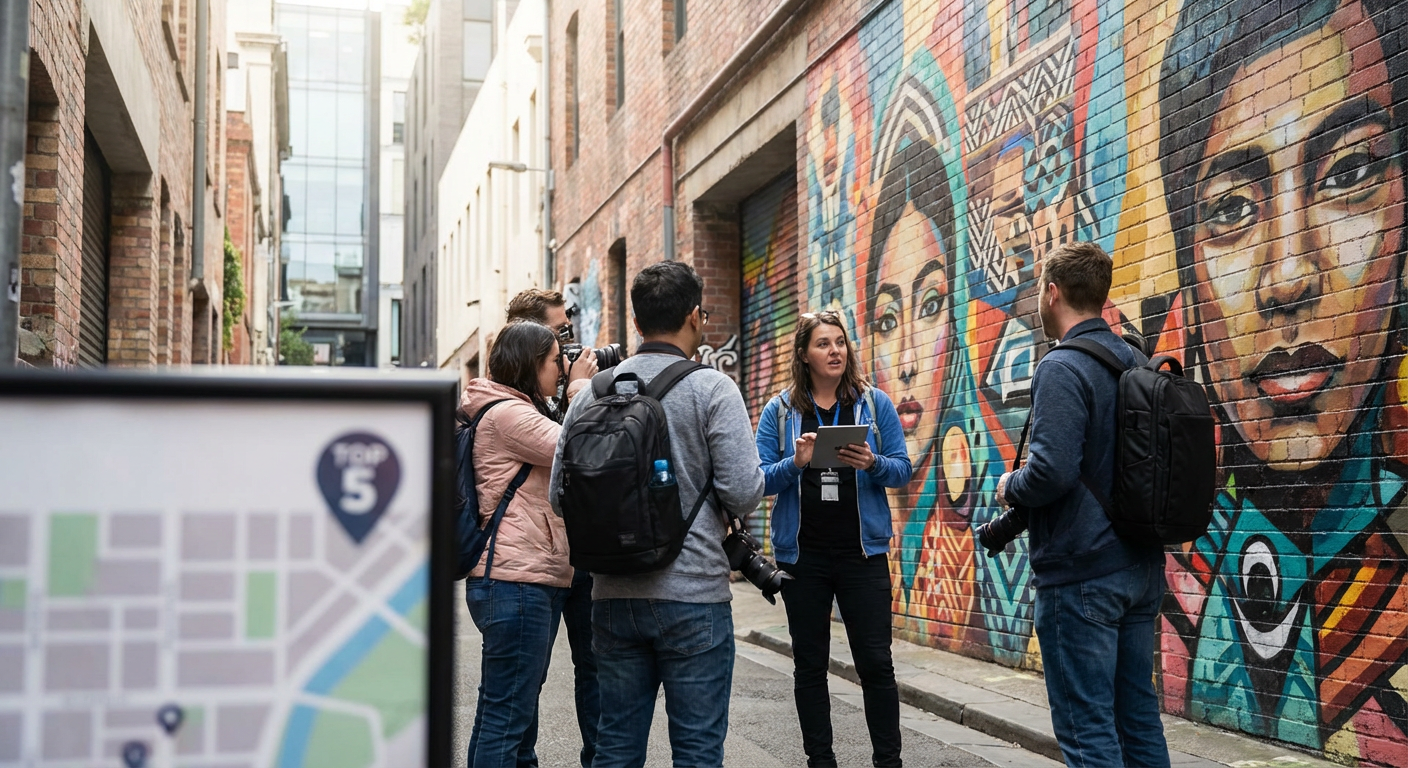
Street art tours are now a top-5 activity in major cities on TripAdvisor. Widewalls street art coverage has been tracking this trend consistently.

What makes this moment worth examining carefully isn’t the novelty but the confirmation. The underlying dynamics have been visible for some time. What’s new is that they’ve reached a threshold where ignoring them requires active effort rather than simple inattention. That threshold crossing is the event, not the underlying movement that produced it.

And city governments balancing graffiti removal with public art investment is part of that same picture. These elements don’t exist in separate silos. They’re reinforcing conditions in the same structural shift.

The Accessibility Guide: The Analysis

City governments balancing graffiti removal with public art investment is where the analysis gets more specific. The surface reading is accessible and not wrong, but it misses the mechanism. The mechanism is where the practical insight lives. What makes this genuinely different from previous cycles is digital projection mapping extending street art into interactive experiences. Understanding this changes what you do with the information.

Artist collectives are reclaiming abandoned spaces as temporary galleries.

The skeptical counterargument deserves honest engagement: prior moments with similar surface characteristics didn’t produce the outcomes that seemed logical at the time. That history is real. What’s different now is artist collectives reclaiming abandoned spaces as temporary galleries, which isn’t a minor variable. It’s the infrastructure condition that previous cycles lacked. Infrastructure changes tend to be persistent in ways that sentiment-driven changes are not. Street Art News is one source tracking this dimension with the rigor it requires.

There’s also a distributional question that often goes unaddressed in coverage of street art and public art movements: who captures the value created by these shifts, and who absorbs the disruption costs? The aggregate picture can be positive while the distribution is uneven in ways that matter enormously to specific participants. Keeping that distributional lens in view is part of reading the situation clearly rather than simply optimistically.

Implications: What This Means If You Care About Starting points for difficult genres

The implications of street art and public art movements extend beyond the immediate context. Banksy’s market value exceeding $100 million annually despite anonymity, combined with the structural conditions described above, creates a situation where adjacent fields, decisions, and communities are affected in ways that aren’t always visible from inside the primary story. The second-order effects are frequently more important than the first-order ones, and they’re where careful attention pays the highest returns.

Culturally literate, opinionated, allergic to safe takes.

The practical question isn’t whether to engage with these dynamics but how. The answer depends on context, on what role you occupy relative to street art and public art movements and what your actual decision horizon is. But the first step is the same regardless: accurate understanding of what’s actually happening rather than what the most available narrative says is happening.

A few concrete observations are worth separating out from the broader analysis. First: mural commissions replacing advertising hoardings in urban regeneration projects isn’t a temporary condition. It’s a new baseline. Second: digital projection mapping extending street art into interactive experiences suggests that the adjustment period isn’t over. Third, and most important: the organizations and individuals who are treating the current moment as a new steady state rather than a transition are making a categorization error that will be costly to unwind later.

The Case Against: What the Critics Get Right

Intellectual honesty requires acknowledging the strongest counterarguments, not just the weakest ones. The case against the optimistic reading of street art and public art movements isn’t trivial. There are structural vulnerabilities in the current picture that deserve direct engagement rather than dismissal.

The most serious objection is the one about sustainability. Street art tours now ranking as a top-5 activity in major cities on TripAdvisor can be read not as a foundation but as a ceiling, a point beyond which growth becomes self-limiting because of the very dynamics that produced it. If the current state has already incorporated most of the available supply of early-adopting participants, the remaining growth curve may be structurally shallower than the recent trajectory implies.

Artist collectives are reclaiming abandoned spaces as temporary galleries.

Looking Forward

The trajectory here is clearer than the pace. Making predictions about when specific thresholds will be crossed is genuinely difficult, and anyone claiming precision about timelines should be treated with skepticism. But the direction toward Banksy’s market value exceeding $100 million annually despite his anonymity and continued development of the conditions described above is supported by the evidence in a way that isn’t contingent on a single variable going right.

Artist collectives reclaiming abandoned spaces as temporary galleries is the variable to watch as the leading indicator. Historical patterns suggest it moves first, with broader metrics following with some lag. This doesn’t make the outcome certain, but it makes it legible. And legibility is the precondition for good decisions.

Three questions are worth holding as the story develops. First: are the structural conditions that enabled the current state durable, or are they cyclical? Second: who is positioned to benefit from the next phase, and does that differ materially from who benefited in the current phase? Third: what would a clean falsification of the optimistic thesis look like, and is there any evidence of that signal emerging? These questions don’t need answers today, but having asked them changes what you notice in the months ahead.

The direction here is clear even when the pace isn’t.

What’s the thing you wish someone had told you at the start?

Sticky post

Fritz Hut

Fritz Hut

Art, culture, and the conversations that matter.

We think culture writing should be as fearless as the work it covers. Our critics and contributors dig into music, visual art, film, and performance with honest eyes and strong opinions. No fluff, no playing it safe…

Topics we cover: Visual Art · Music · Film & TV · Performance · Photography · Criticism

What Contextual criticism Reveals About Street art and public art movements

Most coverage of street art misses what’s really happening. I’ve been watching this space for years, and the surface-level takes about “rebellion going mainstream” completely miss the point. Here’s what everyone’s getting wrong.

This isn’t just another cycle of counterculture getting co-opted. What’s different now is that mural commissions are literally replacing advertising hoardings in urban development projects. Once you see this shift, everything else clicks into place.

What Contextual criticism Reveals About Street art and public art movements

The Numbers Don’t Lie

Banksy’s market value hit $100 million annually while staying anonymous. That’s not just a quirky data point. It’s the economic foundation that makes everything else possible. The conditions behind this didn’t happen overnight, they’ve been building for years.

Mural commissions are replacing advertising hoardings in urban regeneration projects.

Street art tours now rank as a top-5 activity in major cities on TripAdvisor. Widewalls street art coverage has documented this shift consistently.

What’s interesting isn’t the novelty, it’s the confirmation. These patterns have been visible if you knew where to look. What’s new is that ignoring them now requires deliberate blindness. We’ve crossed a threshold.

City governments get caught between graffiti removal budgets and public art investment. These aren’t separate issues, they’re part of the same transformation.

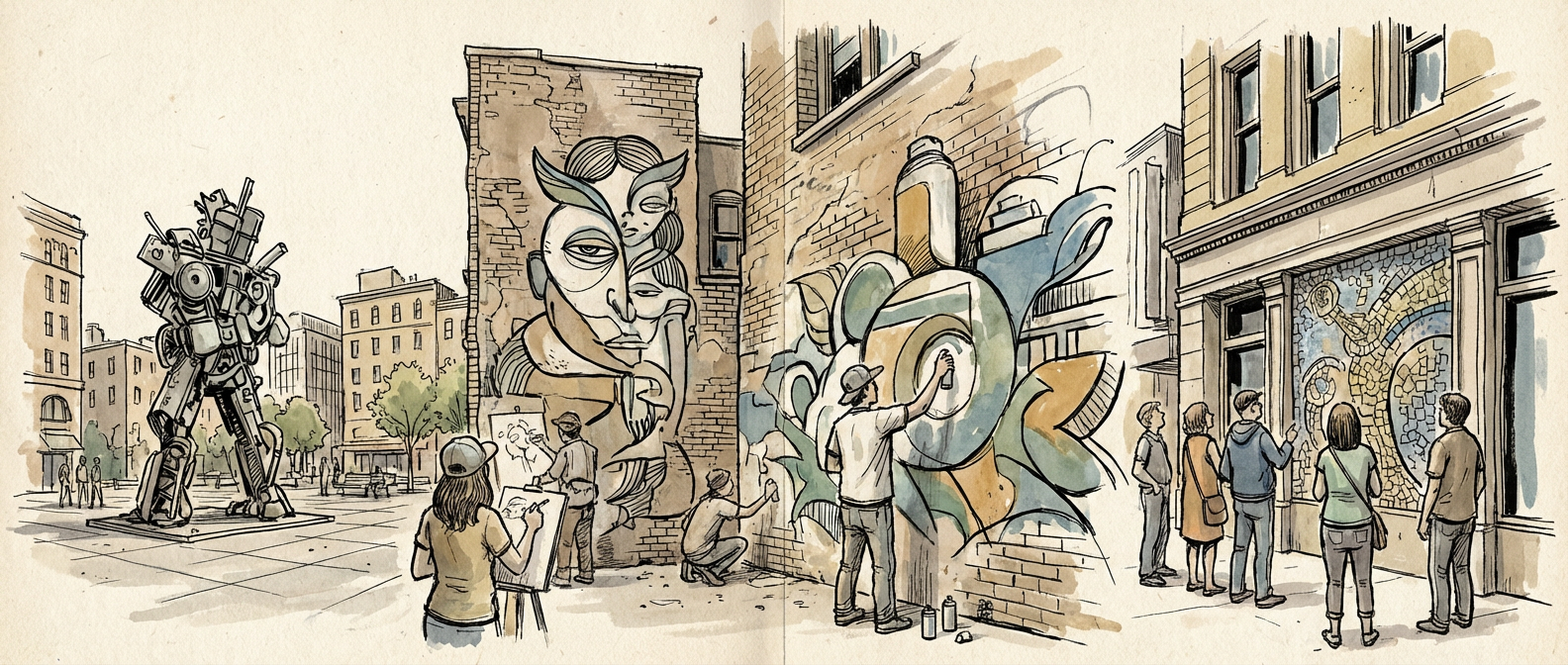
Illustration for What Contextual criticism Reveals About Street art and public art movements

Where the Real Action Is

City governments balancing graffiti removal with public art investment is just the surface story. The mechanism underneath is more important. Digital projection mapping is turning street art into interactive experiences, and that changes everything about how this medium works.

Artist collectives are taking over abandoned spaces as temporary galleries.

I get the skepticism. We’ve seen similar moments before that fizzled out. But here’s what’s different: artist collectives reclaiming abandoned spaces as temporary galleries. This isn’t just artistic energy, it’s infrastructure. Infrastructure sticks around in ways that trends don’t. Street Art News has been tracking this development with the attention it deserves.

There’s also an uncomfortable question most coverage avoids: who actually benefits from these changes? The overall trend might be positive, but the distribution of benefits and costs is wildly uneven. Gentrification dressed up as cultural development is still gentrification.

Why This Matters Beyond Art Circles

Street art going mainstream has ripple effects far beyond gallery walls. Banksy’s $100 million market combined with these structural shifts affects urban planning, real estate, tourism, and local communities in ways that aren’t always obvious.

I tend to be culturally literate, opinionated, and allergic to safe takes.

The question isn’t whether to engage with these changes, but how. Your approach depends on your position and timeline. But step one is the same for everyone: understand what’s actually happening instead of accepting the most convenient narrative.

Three things worth noting. First, mural commissions replacing advertising hoardings isn’t a trend, it’s a new baseline. Second, digital projection mapping extending street art into interactive experiences means we’re still in the adjustment phase. Third, anyone treating this as a stable new normal instead of an ongoing transition is making an expensive mistake.

The Skeptical Case

Honestly, the critics have some solid points. The optimistic reading of street art’s evolution has real vulnerabilities.

The biggest concern is sustainability. Street art tours ranking as a top-5 activity might be a ceiling, not a foundation. If we’ve already captured most early adopters, future growth could hit natural limits created by the same dynamics that drove initial success.

Artist collectives reclaiming abandoned spaces as temporary galleries.

What Comes Next

The direction is clearer than the timing. I’m confident about where this is heading, but anyone claiming to know exact timelines is selling something. The trend toward Banksy-level market values and continued infrastructure development has solid evidence behind it.

Artist collectives reclaiming abandoned spaces as temporary galleries is the leading indicator to watch. Historically, this moves first, with broader metrics following. That doesn’t guarantee outcomes, but it makes them readable.

Three questions worth tracking: Are the structural conditions behind current growth durable or cyclical? Who benefits from the next phase, and is that different from current beneficiaries? What would prove the optimistic case wrong, and do we see any of those signals? You don’t need answers today, but asking these questions changes what you notice going forward.

The direction is clear even when the pace isn’t.

What context am I missing? Add it below.

Blockchain: The Unlikely Hero of the Future

Hey, tech enthusiasts! Today, I want to talk about something that’s been buzzing around tech circles like a bee with a mission—Blockchain. What started as a murmur back in the early days of Bitcoin has now erupted into a symphony of innovation that could very well redefine how we interact with the digital world. Grab your coffee (or your energy drink; no judgment here) and let’s explore why blockchain might just be the unlikely hero of our tech-laden future.

The Humble Beginnings: More Than Just Bitcoin

When you hear “blockchain,” if the first thing that pops into your head is Bitcoin, you’re not alone. But what if I told you that blockchain was like that unassuming sidekick in a superhero movie, waiting to reveal its world-saving potential? It all began with Satoshi Nakamoto—whoever they are—inventing Bitcoin, and Bitcoin’s underlying technology, the blockchain, as a glorified ledger. But fast-forward to today, and we realize this technology has far more to offer than just cryptocurrency transactions.

Blockchain fever is catching on like wildfire, and it’s not just for finance nerds anymore. It’s reaching into tons of different industries. From supply chains to healthcare, blockchain’s distributed ledger offers a new level of transparency and security. And let’s face it, who wouldn’t want a system that allows everyone to be a stakeholder?

Beyond the Buzzword: Real-World Applications

Every tech trend has its moment in the sun, but the real test is whether it can stick around and make a difference. Spoiler alert: blockchain is totally passing this test with flying colors!

The Supply Chain Savior

Ask any logistics manager, and they’ll tell you managing a supply chain is like herding cats. Enter blockchain. By creating an immutable record, blockchain ensures transparency and traceability in supply chains, which means no more lost packages or mysterious delays. Companies like IBM and Walmart are already onboard, ensuring you get your goods without the drama.

Healthcare with Ledger Precision

If you’ve ever had to transfer medical records, you know it’s more like pulling teeth than a quick data transfer. With blockchain, patient records can be shared without the usual headaches while maintaining privacy and security. And if you’re thinking, “Could this really work?” Well, in 2019, Estonia’s healthcare system used blockchain to protect over a million patient healthcare records. Talk about progress!

Voting: A Secure Future

The idea of casting a vote from the comfort of your sofa seems too good to be true, right? With blockchain, secure online voting is more attainable than ever. If there’s a way to revamp our creaky democratic systems, it might just be through blockchain. Consider the 2018 midterms in West Virginia, where a pilot blockchain mobile voting service was called a success. Who knows? Maybe voting in your pajamas is our destiny.

Environment: Green with Envy

Yes, you heard it right—blockchain is getting in on the environmental game too. By providing trustworthy and transparent data, this tech can track carbon credits more effectively and make sure companies are sticking to sustainability pledges. Save the planet and keep companies accountable? That’s a win-win!

Challenges on the Horizon: The Road Isn’t All Smooth

Alright, let’s not just skip straight to a blockchain utopia without talking roadblocks. It ain’t all rainbows and unicorns.

Scalability: Why Won’t You Just Fit?

Let’s talk about the elephant in the room—scalability. Right now, blockchains can be slower than loading a webpage on a dial-up connection. Limited processing power, network latency, and storage issues are often cited as hurdles. Developers and researchers are, of course, on the case, and who knows? Maybe that game-changing solution is right around the corner.

Energy Consumption: Green Elephant in the Room

People often gripe about blockchain’s massive energy usage, especially with proof-of-work systems like Bitcoin. From an eco-friendly perspective, it’s like trading a royal flush for a pair of sevens. The good news is that alternatives like proof-of-stake and hybrid models are gaining traction. So relax, the puzzle specialists of blockchain are solving this too.

Regulation: The Red Tape Maze

In a word: regulations. Blockchain’s decentralized nature makes it a bit of a wildcard for governments. Countries are figuring out how they feel about this tech and, unsurprisingly, opinions vary. But I’m optimistic. After all, who could resist the allure of a secure, transparent system?

The Future: Starry Eyes and High Hopes

Now, let’s have a good old chat about the future. If I were to speculate (and why not, it’s fun!), blockchain could support a future that’s radically different from where we are today. Picture this: a world where trust isn’t something you wish for but something tangible, powered by immutable cryptographic equations.

We might see blockchain paving the way for Decentralized Autonomous Organizations (DAOs), where the success of community-driven projects governs everything from startups to humanitarian projects. Imagine artists, musicians, and writers getting paid directly for their work through tokenization, without middlemen skimming their share.

On a more futuristic note, as IoT devices continue to proliferate, blockchain could provide the necessary trust and security framework to ensure these devices play nice with each other. Maybe a blockchain-powered smart fridge will finally order milk for you without opening the fridge door or profiting from your La Croix addiction.

Conclusion: A New Dawn Beckons

And there you have it! Blockchain isn’t just a buzzword or a fleeting trend. It’s a revolution in the making. As it matures, we’re bound to see its full transformative potential across various sectors. While challenges remain, the possibilities are genuinely exciting.

If you’re as hyped as I am about blockchain’s potential, don’t be a stranger—let’s chat about it! Until our next technological deep-dive, stay curious and keep dreaming big because honestly, the future’s never felt more interesting.

the AI Frontier: Crafting Tomorrow’s Creativity

Ah, artificial intelligence! One moment it’s beating grandmasters at chess, and the next, it’s helping create a new generation of Picassos and Beat poets. What a wild ride it’s becoming. Today, we’re stepping into the kaleidoscopic world of AI in creative arts. And boy, is it exciting! Grab your artistic beret and your futuristic reading glasses (because, why not?), as we dive into how our silicon-based buddies are redefining creativity in ways that seem almost uncannily… human.

The Balance Between Silicon and Symphony

Remember when creativity was exclusively human turf? AI has been shaking things up, expanding the creative horizon to include a partnership between the digital and the artistic. Recently, tools like OpenAI’s DALL-E and Google’s DeepDream have been generating mesmerizing images straight out of a fever dream. And then there’s GPT-3, which sometimes seems to have swallowed a library of world literature, making writers wonder whether they should collaborate with or be wary of their new automated colleague.

The magic lies in AI’s ability to analyze massive data sets (think of it as gobbling up entire museums and libraries) to then produce compositions that either mimic human creativity or tread entirely new grounds. The appeal of this collaboration is like having a creative muse who can also do calculus at the speed of light. What could be better than finding beauty in precision?

Breaking Down the Creative Process

Let’s unpack what it takes for an AI to create. You feed it data. Lots of it. Styles, genres, historical contexts—it’s like giving a crash course to an over-enthusiastic college student who insists on double majoring in art and computer science. Once trained, AI uses this data to generate original content. For instance, a neural network might produce a symphony by learning from composers across centuries. It’s a bit like having Mozart and AI co-pilot the show.

Of course, the questions arise: is it truly original? Can an algorithm express emotions as humans do? It’s a fascinating debate, as some argue true creativity involves emotional depth and a subtlety that machines can’t grasp. Yet here we are, witnessing algorithms painting works that evoke emotions, blurring the lines between machine learning and human feeling.

Seeing Pixels in New Ways

Visual arts have seen a revolution thanks to deep learning algorithms. From traditional mediums like painting and photography, AI expands the canvas to interactive installations and generative designs. Need a futuristic cityscape for your video game? Platforms like Artbreeder let you design using AI-generated elements, making every pixel a point of possibility.

Take Google’s DeepDream, for instance. Those trippy, swirling visuals have inspired artists to use AI not just as a tool but as a co-creator. By amplifying patterns and tweaking neural connections, AI can create visuals that tickle the imagination and bend reality’s boundaries. It makes me wonder how long until AI imagines something we humans can’t even comprehend. Now that’s a hallmark of true creativity, or is it?

The Sounds of Tomorrow

AI in music has advanced to the point where it can compose symphonies with intriguing layers and complex rhythms. Amper Music, AIVA, and Google’s Magenta are leading the charge in creating scores that are compositionally complex and emotionally resonant. From ambient soundscapes to full-blown orchestral pieces, AI compositions blend the analytical prowess of machines with the emotive depth of classic compositions.

Musicians are increasingly viewing AI as a collaborator. Sure, your algorithm drummer might not have tales of endless band practice, but it compensates with an infinite rhythmic library. Here’s a fun thought experiment: might AI one day improvise jazz better than Coltrane ever did? Don your trilby, and let’s see where this interstellar jam session takes us!

Written by Robots

Enter the world of AI-scribed narratives. We’ve already seen successful forays into screenwriting and journalism, where data-driven storytelling allows AI to work on plot twists and character arcs. GPT-3, for instance, is transforming how we perceive written creativity. It’s not quite Philip K. Dick, but it’s getting eerily close.

The implications here are vast. Will AI-authored novels become bestsellers? Will they even need a human editor? It’s a curious timeframe we’re heading into when AI might not only tell the story but be the story. Imagine a world where each AI has a personality imprinting its creator, each influencing narratives in wildly different ways.

A Look Into the Crystal Ball

So, what does the future hold for AI in the creative arts? There’s no doubt AI will continue to impact how we think and create. But envisioning a world where every creation is a symbiotic fusion of human and AI genius feels more like an eventuality than a wild concept.

Sure, there are inevitable challenges: the ethics of authorship, concerns of losing the human touch, and the looming question of intellectual property. Nevertheless, collaborations between artists and AI will push the boundaries of the conceivable, producing innovative work that neither man nor machine could achieve alone.

Whether you call it a renaissance or a revolution, one thing is clear. AI isn’t here to replace human creativity, but it’s definitely here to reshape it. Much like a careful dance, as long as we maintain the delicate balance, we’ll keep discovering new possibilities in this uncharted artistic frontier.

So there you have it, folks. As we paint, compose, and write our future with AI by our side, we find ourselves in a grand cosmic collaboration. And just maybe, the best is yet to come.

Breaking the Chains: The Expanding Universe of Blockchain

Hey folks, gather ’round. Today, we’re diving headfirst into the ever-expanding universe of blockchain. No, it’s not just about Bitcoin and Dogecoin anymore—though I must admit, those wallets are fun to watch! We’re talking about a tech that’s blossoming like a digital garden party fueled by nerdy excitement and potential. Buckle up, it’s gonna be a wild ride.

From Cryptocurrency to a New Digital Dawn

First, let’s clear the table—blockchain isn’t just for buying coffee with Bitcoin. While cryptocurrency understandably captured the limelight for a hot minute (or, like, three years), blockchain technology has been quietly laying the groundwork for something waaay bigger. Picture it as the internet in the ’90s, before everyone and their grandma had an AOL email address. Wild to imagine, right?

Blockchain is a decentralized ledger spread across multiple computers. This might sound as exciting as dry toast, but hang with me. This decentralized nature cuts out middlemen completely—think banks, trust entities, or anything sketchy. Who wouldn’t want that?

Real-World Applications: Making Waves Across Industries

Alright, so how is blockchain changing our world beyond spinning up digital coins? Let’s walk through some game-changing applications.

Health and Well-being

In healthcare, blockchain is turning flimsy, error-ridden record systems into Fort Knox for medical records. Imagine having your entire medical history available securely whenever, wherever—a bit like having the Batcave’s supercomputer but with less gadgets and more HIPAA compliance. Companies like Euromediacare are already on it, developing blockchain-based health apps to track treatment outcomes and make interactions between people and providers smoother.

Social Impact and Governance

Hold onto your hat—blockchain’s got your back here too. Voting, traditionally about as exciting as watching grass grow, is being transformed. Companies are testing blockchain to make voting transparent, tamper-proof, and easy. Just imagine: more people at the polls and those pesky voting fraud rumors? Banished! Estonia’s e-Residency and Georgia’s land registry are trailblazers, bringing blockchain to governance and creating digital experiences that sound straight outta a sci-fi novel.

Supply Chain Revolution

Anyone still mad about that Snickers that you bought which tasted…off? Well, blockchain to the rescue again! It’s changing supply chains by tracking products through every step of production and sales. Walmart and IBM are already knee-deep in blockchain to monitor food supply chains. Now, if a bar of chocolate’s origins sound as convoluted as an Agatha Christie novel, you’ll know. Sweet justice for consumers and farmers alike!

Navigating the Stormy Seas: Challenges Ahead

Oh yes, the utopian vision of blockchain is all sunshine and rainbows—until you hit these stormy seas. The tech has promise, sure, but there are a few pirates on the horizon.

Scalability and Environmental Concerns

As blockchain networks grow, the strain on power increases—a bit like trying to squeeze an elephant into a Prius. Bitcoin and Ethereum use a ton of energy because of the intense computational puzzles they solve—a classic case of overachievers being too thirsty for validation. Fear not, Ethereum is working on its 2.0 version, promising to slash energy usage significantly. Let’s cross those fingers they succeed!

Regulatory Tightropes

Navigating the legal mazes and international regulations might be the real-life equivalent of playing Frogger (remember that?) in traffic. That’s because countries differ wildly in their stance on blockchain, from full embrace to side-eye suspicion. We’re talking red tape Everest waterfalls. But companies like ConsenSys are working on user-friendly platforms to make regulatory compliance smoother.

The Future: Where This All Leads

But where does this really leave us with blockchain? Bear with me here because we’re going into noodle-scratching speculative mode.

Picture blockchain-powered identity verification for easy cross-border travel. Or smart contracts efficiently managing energy grids for your Tesla’s charging needs, all managed by decentralized autonomous organizations (DAOs) for creative and inclusive decision-making. If that doesn’t sound like sci-fi, I don’t know what does!

With tech giants like IBM and start-up powerhouses like Chainlink at the helm, we can expect smoother blockchain integration and more mind-blowing collaborations across industries. They’re like the Avengers of blockchain, destined to protect us from inefficiencies!

Wrapping Up: A World of Endless Possibilities

So there you have it: that’s a snapshot of the wild world of blockchain, a tech with universe-sized potential. Just think about the ’90s internet again but with a futuristic twist. As we step carefully into this blockchain world, gear up for a future with more mom-n-pop stores selling just by scanning your face (legit legit) and a remarkably transparent, secure future.

Remember, every great technological advance needs a solid dose of imagination, and we have optimism to spare. As we embrace what blockchain holds, one thing’s for sure—this story is only starting.

Excited yet? I know I am. Let’s watch this cosmos unfold!

Breakthroughs in Longevity: How Emerging Technologies Are Redefining Aging

Are you ready to live forever, or at least feel like you could? Technology is making huge leaps in the longevity field, giving us glimpses into a future where living past a hundred might be normal rather than rare. Today’s blog digs into how new tech is about to change aging and extend our lives in ways we couldn’t have imagined just a couple of decades ago. So, grab some green tea (antioxidants are still your friend!) and settle in as we explore the cutting edge of longevity technology.

The Fountain of Tech: Introduction to Longevity Technology

Let’s put it out there—many of us are fascinated, (read: obsessed), with aging slower or even pausing it. The concept of the “fountain of youth” isn’t that far-fetched anymore, thanks to science and technology working together. Driven mainly by advances in biotechnology, artificial intelligence, and genetic engineering, these innovations are opening doors and extending lifespans. And the market is all in—investments in longevity-focused ventures are going through the roof.

What is Longevity Tech?

At its core, longevity tech takes multiple approaches to understanding, delaying, or even reversing aspects of human aging. Innovations in this area cover various domains—genomic science giving us targeted therapy, AI algorithms predicting health issues before they happen, and even robotics helping with elder care in ways unimaginable a decade ago. Longevity technology wants to provide not just longer lives but better quality ones.

Genomics: The DNA Tweak

If you’re following genomics, you know it’s not sci-fi anymore. CRISPR gene-editing technology is the tool currently prying open Pandora’s (positive) health box. With it, scientists want to tweak the human genome in ways that could seriously boost human lifespan and improve health. The blueprint for your body—your DNA—can now be altered, and scientists are thinking about using these advances to wipe out age-related diseases.

CRISPR and Anti-Aging

While the ethical implications of CRISPR are hot topics, the potential benefits are huge. Imagine a world with minimal Alzheimer’s cases or heart problems. Researchers are even working to extend lifespan by improving how our mitochondria function. But what’s really wild? Some even predict we could effectively stop aging within the next 50 years. Even if this feels like a “Star Trek” episode, the groundwork for these possibilities is happening right now.

Artificial Intelligence: Algorithms That Could Predict Your Future

Artificial intelligence isn’t getting left behind in the longevity conversation. Think about this—AI systems are being built that could predict potential health issues before they actually happen. By sorting through tons of data, AI algorithms create personalized wellness plans and spot potential risks, extending life expectancy and improving quality of life.

Predictive Healthcare

This isn’t just science talk. Companies like IBM Watson Health and DeepMind’s Health team are using machine learning to analyze massive datasets and build predictive healthcare models. Imagine your wearable device telling you months in advance that your primary health marker is a bit off, pushing you to schedule a doctor visit. That’s like having a sixth sense for healthcare!

Biotechnology: The Real-Life Immortality Machines?

Biotechnology is another pillar supporting these advances. There’s a bunch of companies jumping into age-related biotech. Take Unity Biotechnology, who’s experimenting with drugs that selectively destroy “senescent” cells—the cells that contribute to tissue breakdown. The excitement doesn’t stop there—scientists across the globe are eagerly waiting to see if these technologies make it from lab dishes to human trials successfully.

Targeting Senescence

Senescence is aging at the cellular level. While it’s natural, when it gets out of hand it leads to age-related diseases, so targeting it could be the key to extending life. Senolytic drugs are now in the spotlight, hitting senescent cells and leaving the healthy ones alone. This “senolytics wave” is just starting and could completely change elder care and life extension within the next few decades.

Tech’s Social Impact: Beyond the Lab

Let’s not get lost in the techno-magic. The societal implications of these solutions are huge. There’s reason to pause and think—is the world ready for octogenarians who can run marathons and work decades beyond their expected retirement? How will extended lifespans affect resources, the economy, and even social norms?

Economic Transformations

Consider the impact on healthcare, insurance models, and even job markets. With extended lifespans, we could see major changes in healthcare infrastructure to handle the needs of a longer-living population. Not to mention, pension schemes and retirement plans will need complete overhauls. Will older be the new middle-aged in the job market?

Stepping into the Future

For all its promises, longevity tech has plenty of hurdles—ethical, social, and scientific. But the direction we’re heading is definitely fascinating. While we’re not yet close to achieving biological immortality, the possibilities are exciting.

Embracing these upcoming technologies means balancing optimism with caution. So, as you hold your cup of antioxidizing tea, remember you might just live to see a world where our current worries about aging could be things of the past.

Stay tech-savvy and proactive, folks, because the future is moving at breakneck speed, and longevity just happens to have a front-row seat on this rapidly accelerating train! Keep your eyes on this space as we continue to track the breakthroughs changing how long—and how well—we can really live.

Racing Toward Immortality: How Longevity Breakthroughs Are Coming to Life

It’s wild to think about how far we’ve come in just a few decades. From clunky computers that filled entire rooms to smartphones in our pockets, technology seems to be on warp speed. Today, I want to talk about something that feels almost mythical, practically sci-fi but inching closer by the day: longevity. Yes, the holy grail of human existence, the quest for longer, healthier lives. It might sound like something from a utopian future, but folks, we’re closer than you’d think. The longevity industry is heating up faster than a superconductor.

Pioneers and Game Changers

The longevity sector isn’t just for the niche nerdy circles or speculative investors anymore. With household names like Google and Jeff Bezos getting involved, you know it’s serious business. Calico, Google’s longevity project, is essentially a startup on steroids that’s been working behind the curtains since 2013. Its mission? Nothing less than understanding the biology of aging and, by extension, finding ways to extend life.

Then there’s Altos Labs, the new kid on the block but with a billion-dollar bankroll, thanks partially to Bezos. Talk about deep pockets meeting deeper ambitions. Altos has been making waves with its focus on cellular rejuvenation programming. The goal is to transform how we age using regenerative medicine and epigenetic reprogramming. In layperson terms, they’re working on making our cells behave like they’re still young and sprightly. Crazy, right?

Cutting-Edge Science: Hacking the Biological Clock

Now, let’s get down to the nitty-gritty: the science behind these mind-bending developments. While it’s riveting to talk about companies and personalities, the real heroes are the breakthroughs themselves. One of the most promising avenues is cellular senescence.

Cellular senescence is basically the process by which cells lose their ability to divide and function. It’s one of the primary culprits behind aging and age-related diseases. Scientists are exploring how to remove these senescent cells to rejuvenate tissues, hitting the refresh button on our biological clock. Senolytics, a class of drugs designed to target these worn-out cells, have been making headlines for their potential in extending lifespan and healthspan.

Let’s also talk gene editing while we’re here. CRISPR technology has already revolutionized the biotech scene, and its role in anti-aging research can’t be overstated. By editing genes associated with aging, like the infamous “longevity gene,” FOXO3, researchers are creating models that can potentially extend lifespan significantly.

Our Gut and Aging: The Microbiome Equation

The gut microbiome is another fascinating area of longevity research. Your gut isn’t just about digesting last night’s pizza. It’s home to trillions of microorganisms that play a huge role in your overall health. Recent studies suggest that an imbalanced microbiome could accelerate aging, contributing to a decline in immune function and even affecting cognitive health.

Enter microbiomics: the study and manipulation of the gut microbiome. New startups are focusing on creating personalized treatments that optimize gut health, with a long-term vision for increasing lifespan. Companies are developing bespoke probiotics and personalized nutrition plans to give you a gut check that may well add years to your life.

Wearable Tech: The Quiet Revolution

When we talk about technology and longevity, wearables often take a backseat. But don’t underestimate these gizmos. They could be the unsung heroes of the longevity movement. Devices like WHOOP, the Apple Watch, and Oura Rings aren’t just there to tell you how many steps you’ve taken or how badly you slept last night. Increasingly, they’re focused on predictive health analytics, offering insights into your physiological age over your chronological number.

By tracking biomarkers like heart rate variability and sleep patterns, wearables can provide real-time biofeedback, helping you make data-driven decisions that could literally add years to your life. Imagine knowing you’re on the cusp of an illness before it happens or catching signs of distress early. That’s not just a Fitbit telling you to move, that’s life extension 101.

The Million-Dollar Question: Is This Accessible?

Here’s where the techno-utopian dream hits a snag. Much like pioneering tech before it, longevity solutions are currently expensive and somewhat elusive for the average Joe. As of now, personalized treatments, advanced therapies, and high-tier wearables often come with a hefty price tag. However, as we’ve seen with technologies like IVF or even genetic sequencing, prices tend to drop as innovations become mainstream.

And this is where public and private investment can make a world of difference. Scaling these treatments to be accessible for the masses is a bit like a public works project. It requires funding, infrastructure, and policy tweaks. Look for governments to start taking more active roles in this space as the potential economic and healthcare benefits become undeniable.

The Ethical Conundrum: Should We Even Be Doing This?

It’s impossible to talk about longevity without getting into the ethical mess that accompanies it. Philosophers and ethicists have long debated whether extending human life is a moral imperative or a slippery slope into an elitist future. Shouldn’t we be more focused on living better before we live longer? And then there’s the issue of longer lifespans exacerbating problems like overpopulation and resource scarcity.

These ethical debates aren’t flimsy hurdles. They’re linchpins that shape public perception and policy. As tempting as the Fountain of Youth is, the goal should be an equitable extension of healthy living for all, not just a privileged few.

The Endgame: Why This Matters

Finally, let’s talk about why you should care, apart from the obvious appeal of living longer. For one, longevity technologies often have a trickle-down effect, spurring advancements in other healthcare sectors. More importantly, they can rewrite economic models by transforming how we think about careers, retirement, and social welfare.

Imagine a world where your 60s are the new 40s. What happens to traditional retirement? What do social services look like when they’re no longer burdened by age-related diseases as heavily? While these questions are daunting, they also open the door for incredible innovation and change. Longevity isn’t just about adding years to life. It’s about adding life to years, and who wouldn’t want that?

So, there you have it, a closer look at the tantalizing world of longevity. These breakthroughs may seem pie-in-the-sky now, but remember, today’s fantasies are often tomorrow’s realities. Whether you’re an investor, a scientist, or just someone looking forward to a sprightly future, keep your eyes on the horizon. The quest for longer, healthier lives isn’t just coming. It’s already begun.